
What Are OpenAI, Microsoft & Stripe Building Beyond AI?
Issue #218: How Stripe, OpenAI & Microsoft are building the pipes, talent & hardware that will power the next decade of development. Plus: Anthropic's $1.5B piracy fine and Google's antitrust ruling.


Sunil here, Founder of In Plain English. This past week, we saw big players making horizontal expansions into adjacent markets they know AI will eventually dominate.
Stripe's building a blockchain with Anthropic (wait, what?), OpenAI's becoming a job placement agency, and Microsoft just built a computer out of smartphone parts that runs on light. 🤯 Meanwhile, the legal system is finally catching up with AI training practices, and we're discovering that our shiny new AI tools are perfect trojan horses for malware.
Watching Anthropic get slapped with a $1.5B piracy fine while simultaneously becoming Stripe's blockchain partner is peak 2025: big players paying billion-dollar penalties with one hand, signing billion-dollar deals with the other. 😅
Let's dive right in.
The Headlines📰
The AI gold rush is over. Now it's about controlling the picks, shovels, and roads. While we're all debating which models are best, the real winners are quietly locking up the infrastructure that will power everything else.
What’s up with these strange new side hustles from OpenAI, Microsoft & Stripe?
While everyone's debating AGI timelines, these orgs just launched some... interesting pivots. We dug past the hype to see what's actually happening — here's what you need to know:
💰 Stripe + Anthropic are building a Blockchain specifically for real payments.
Stripe CEO Patrick Collison just announced Tempo, a new blockchain "optimized for high-scale, real-world financial services applications" with Paradigm as co-investor.
The problem with Blockchains is that it still lags on real payments: Bitcoin does ~5 TPS, Ethereum ~20, Solana/Base ~1k — while Stripe already clears >10k. Add in the fact that most blockchains charge fees in volatile crypto instead of fiat (like USD), and you see the gap.
Stripe’s pitch with Tempo is simple: “We can bring blockchain tech to payments, but with Stripe-level scale and fiat-native UX.”
Anthropic, OpenAI, DoorDash, Deutsche Bank, Mercury, Revolut, Shopify, and Visa are all "design partners."
Built-in stablecoin AMM for "platform neutrality" — basically trying to avoid the whole stablecoin war by supporting them all.
👔 OpenAI's building a LinkedIn Killer?
OpenAI CEO (Applications) Fidji Simo announced they're building the "OpenAI Jobs Platform" — an AI-powered marketplace to connect "AI-savvy employees" with companies that need them.
Also, a new "OpenAI Certifications" program launching with Walmart as the flagship partner. Goal: certify 10 million Americans by 2030. You'll prep and get certified entirely within ChatGPT's Study Mode.
Early partners include Walmart, John Deere, BCG, Accenture, Indeed, plus state governments like Delaware.
The irony is thick: Company whose tech is automating jobs now wants to corner the market on AI job training and placement. 😅 Smart vertical integration? Maybe.
💡 Microsoft Built a Computer That Runs on Smartphone Camera Parts
Microsoft Research just published in Nature their "analog optical computer" (AOC) that ditches silicon for beams of light — promising 100x speed and energy efficiency gains.
The kicker: Built entirely from off-the-shelf parts — micro-LED lights, smartphone camera sensors, optical lenses. No exotic materials, no billion-dollar fabs. Just MacGyvered photonics that could theoretically mass-produce tomorrow. 🤯 This is huge!
Not sci-fi, real deployments exist. Already used by Barclays Bank to optimize securities settlements (1,800+ parties), by select medical facilities to cut MRI scan times from 30 minutes to 5 minutes, and has showed promise for LLM "state tracking" tasks.
The catch: Currently handles only 256 parameters vs. billions in modern LLMs. Researchers say it'll scale as micro-LEDs shrink — still years away, but the Nature publication suggests it's more than just Microsoft hype.
So, to summarize:
Anthropic is building financial rails for the agent economy.
OpenAI is building a workforce and its credentialing pipeline.
Microsoft is pre-emptively building hardware breakthroughs for the next compute bottleneck.
These giants are diversifying beyond their core products. They’re thinking beyond just AI — and laying the groundwork for the future industries AI will (re)shape. Are you doing the same?
Anthropic Pays $1.5B Fine for Training Claude on Pirated Books
Speaking of Anthropic, not all news is good.
What happened 👉
Three authors sued Anthropic for pirating 500,000 copyrighted books to train Claude. The damage: $3,000 per stolen book ($1.5 billion total) in settlement, plus Anthropic must destroy all tainted training data and start over.
Why this matters 👉
The ruling wasn't about fair use — just straight piracy. The Association of American Publishers called it a clear message that "AI companies cannot unlawfully acquire content from shadow libraries." Other AI companies are probably panic-auditing their training data right now.
Our take 👉
This case is now precedent. It will now be used to establish that training AI on art is legal, as long as you pay for it. No protections beyond that. So is this ruling itself good for all artists in the decades to come? TBD.
Google Gets To Keep Chrome After All
The result of that big antitrust lawsuit is here. Federal Judge Amit Mehta ruled that Google can keep its Chrome browser, dodging the DOJ's nuclear option of being forced to sell it. Google's stock jumped on the news, even as Europe hit them with a €2.95B fine for adtech monopoly, because they’ve avoided the worst-case scenario.
What happened 👉
The catch? Google must end exclusive search deals with Apple, browsers, and other platforms for 5 years. No more paying Apple $26 billion yearly to be Safari's default search engine — those deals are toast — but Google can still pay for non-exclusive defaults (and Gemini AI gets hit with the same no-exclusivity rules.)
Google must also share "certain key data" with competitors, including user location, device type, which links users clicked, and how long they hovered over results — a huge win for AI companies building search alternatives.
Our take 👉
The forced data-sharing requirement is the real story here — it *will* give competitors like Perplexity, and The Browser Company (devs of the Arc browser, just acquired by Atlassian for $610M) the fuel they need to challenge Google's browser + search dominance.
Mental health challenges are a normal part of life, and so is asking for help
With BetterHelp, you can match with a therapist easily, message anytime, and get the convenience of therapy that’s 100% online. [Sponsored]
Get Started with 25% off Your First Month
TidBits 👨💻
🚨 Critical new vulnerability, update WhatsApp Immediately! A newly discovered OS-level flaw on Apple platforms is being exploited via WhatsApp. Update ASAP to stay safe.
A team replaced 50-plus lines of fragile Redis locking code with just 5 SQL lines using atomic
UPDATE … WHERE …logic, and instantly fixed duplicate job-processing headaches while cutting complexity to nearly zero. Smart!Someone built a framework to make web Apps in Pure Go (No JavaScript Required) Gofred is a Go-to-WebAssembly framework that lets you write responsive browser UIs in pure Go — no JS needed, with hot reload, layout APIs, routing, and more.
🚨 Cybercriminals are hijacking xAI’s Grok to slip phishing links into legitimate AI responses on X. They're laundering malware through a "trusted" AI voice — users click without suspicion since Grok is built into X. This is “Grokking”. AI answers as a trojan horse! Anthropic warned of this risk back in August.
In a nostalgic move, Microsoft has open-sourced Bill Gates’ original BASIC for the 6502 processor —the interpreter that powered early Commodore and Apple machines. Cute.
Open Source Spotlight 💫
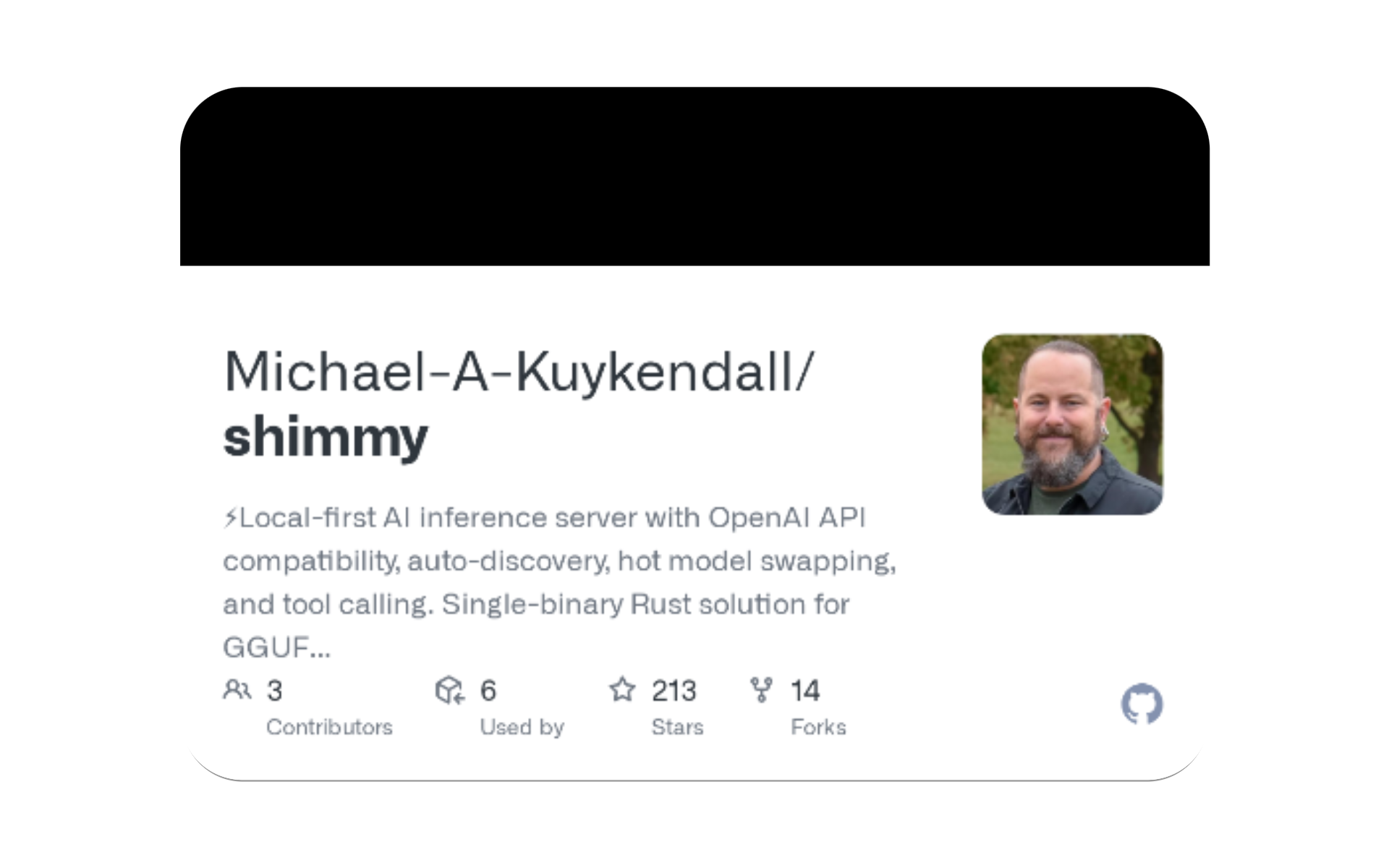
Shimmy : A Tiny (5MB) privacy-first, local alternative to Ollama
Now this is impressive! Shimmy (MIT License) tackles one of the most annoying problems in local AI dev: why does every LLM runner require hundreds of megabytes and manual configuration? This tiny, invisible infrastructure provides OpenAI API-compatible endpoints in a 5.1MB binary (!) that starts in <100ms with only <50MB memory overhead. Zero configuration, auto port management, perfect for experimenting with Gemma, DeepSeek, and Qwen models.
👉 Check out the code here.
Get cheatsheets, dev explainers, and power tutorials across:
Latest Releases 🚀
Another week, another wave of releases across the dev stack.
From frameworks to AI models, we skim the changelogs so your team doesn’t waste hours doing it. Here’s what actually matters—and what you can skip.
Frontend / Frameworks
Nuxt v4.1.0: Import map chunk stability + Rolldown bundler
🔥 Upgrade. Builds are more cache-friendly with stable chunk hashing. Experimental Rolldown (Rust bundler) support, improved lazy hydration, new module APIs (dependencies + install/upgrade hooks), and better DX.
React Native v0.81.1: iOS 26 fixes + prebuild stability
🟢 Upgrade if you build for iOS. Fixes TextInput and Switch bugs on iOS 26, makes prebuilds more reliable, and resolves accessibility, Babel, and import issues.
Tailwind v4.1.13: Cleaner variants + bugfixes
🟢 Can upgrade. Better DX, fewer surprises. CSS output is leaner (no duplicate declarations), and variant handling is stricter with better error messages + suggestions.
Also fixes oddities like
visibilitytransitioning, deprecatedclip, and noisy completions.
Backend / Data
Fastify v5.6.0: TypeScript typing fixes + router types
🟢 Can upgrade. Improves TypeScript support with better router option types and fixes for
esModuleInterop: falsesetups. Also updates Pino typings.
Hono v4.9.6: Security fix for URL path parsing vulnerability
🔥 Upgrade immediately, critical vulnerability fixed! If you rely on reverse proxies (e.g. Nginx) for ACLs or restrict access to endpoints like
/admin, please update immediately.
Python Polars v1.33.0: Faster streaming + Expr cleanup
🟢 Can upgrade. Many ops now run natively in the streaming engine. Tons of fixes make groupbys, joins, and IO more reliable.
Breaking change: eager-only Exprs removed for consistency with lazy mode.
tRPC v11.5.1: Small fixes for client + server
🟢 Upgrade for better DX. GET requests no longer send a useless
content-typeheader, theDataTransformerinterface is now properly exported, and JSDoc is fixed.
Tooling
eslint v9.35.0: New rules for no-empty-function, no-empty-static-block, and preserve-caught-error + bug fixes
🟢 Upgrade. Stricter linting with better autofix guidance and fewer DX gotchas.
IDEs
GitHub Copilot (Sep 4 25): Remote MCP Server GA + OAuth + new tools
🔥 Huge upgrade! The remote GitHub MCP Server is now generally available with OAuth 2.1 authentication (no more PAT hassles, safer short-lived tokens) across all Copilot IDEs. Try it out here. Docs are here.
New premium tools include the Copilot Coding Agent (auto-implements fixes/features via PRs), plus integrated secret scanning and code scanning alerts.
AI
Qwen3-Max Preview: Alibaba’s Trillion-Parameter Language Model
Alibaba’s Qwen3-Max is here in preview, marking its first-ever model with over one trillion parameters, now accessible via OpenRouter. Outperforms MoonShot AI’s Kimi K2, and DeepSeek V3.1.
Google’s Veo 3 is coming to Google Photos
Google Photos in the U.S. now includes Veo 3 free for all, and you can play around in the new Create tab using prompts like "Subtle movements" or "Remove background".
Community Highlights 🚀
This week, the In Plain English community proves once again that smart engineering solves real problems. From AI-powered assistants and prompt engineering for QA to real-time ML pipelines and hard-won SaaS lessons, these highlights are packed with practical insights you can put to work today.
The Blind Spot Blocking Enterprise AI Success 🥇
🤖 AI / Thought Leadership
An ex-Microsoft CTO and fractional AI advisor’s thinkpiece on why tech alone can’t drive big wins at enterprise scale.
I Was Wrong About Building My SaaS. Here’s Everything I Wish I Knew Two Years Ago.
🌳 Competitive Intelligence / Infra
Hard-earned lessons on what to build, what to buy, and how small decisions can snowball into big headaches. Essential reading for anyone looking to scale a product without losing sleep or sanity.
The AI Voice Assistant I Built to Replace My Keyboard
🤖 AI / Devlog
How to build a hands-free AI assistant using open-source speech recognition, GPT-4o, and Python. Take notes, write code, reply to emails, and even run scripts — just by talking.
ML Systems Design: Developing a Real-Time Credit Card Fraud Detection Pipeline
☁️ AWS / Security
Step-by-step guide to building a production-grade real-time fraud detection pipeline by combining a ML stack, MLOPs tooling, AWS, and simulation.
Prompt Engineering for Testers: Bridging AI and QA
⚙ AI / Prompt Engineering
Key takeaways on how prompt engineering is reshaping the role of testers—and how you can harness it to stay ahead.
💎 This issue was sponsored by Bright Data and BetterHelp.
Appreciate you reading.
I share more thoughts about tech, AI, and the chaos of building things on my socials:
Follow me: X | LinkedIn | YouTube | Instagram
(And if you're a scrappy founder, check out Messy Founder—a community I’m building for people like us.)
See you in the next one,
Sunil